


6 Types Of Stone Crushers And How To Choose The Best?
Stone crusher is an indispensable part of crushing, sand making, grinding and other processes. This article will tell you how to select the right crusher for your stone crusher business.
What's A Stone Crusher?
A stone crusher is a type of pulverizer that uses mechanical energy to break blocks of stone, concrete, or other building materials into smaller blocks of a specific grain size.
From very hard stones to soft minerals, crushers can be used for a very wide range of materials,they can be utilized in a variety of applications in industries such as mining industry to reduce the size of ore blocks and facilitate their processing,crushed stones previously used as building materials and demolition, crushing the debris left after the demolition of buildings, roads, bridges, canals and various other structures.
How To Choose A Right Stone Crusher?
Choosing the appropriate stone crusher is important for every operation, but how to choose a right stone crusher? There are several characteristics to consider:
1. Type and Hardness of Materials The type and hardness of materials are the first factors to be considered in the selection of crushing equipment. Different types of materials will have different hardness and structure, which will have the primary limit on the selection of stone crusher. Generally, the greater the hardness, the higher the crushing difficulty coefficient.
2. Material Specification If the material size is large, jaw crusher can be selected as primary crushing; When the size of stone is small and needs to be composed of stone with certain gradation, combined crushing and screening equipment shall be selected.
3. Humidity of Materials The water content of the material will also affect the selection of the stone crusher. When the water content is too large, the fine materials will agglomerate or stick to the coarse materials due to the increase of humidity, so as to increase the viscosity of the materials, reduce the ore discharge speed and reduce the productivity. When it is serious, it will even block the ore discharge outlet and affect the normal production.
4. Granulometric Requirement The incoming and outgoing particle size is used to judge the model and crushing level of the required crushing equipment.
5. Output Requirements The output requirement is an important index to determine the crushing equipment. The higher the output requirement, the larger the required crushing equipment specification, and the corresponding input and output will increase.
6. Construction Site The specific situation of the construction site is the most direct factor affecting the selection of crusher equipment, such as the site size of the construction site, the specific placement position of crushing equipment, etc.
6 Types Of Stone Crushers
1. Jaw Crusher:
The working mode of the jaw crusher is intermittent, and the rock material is crushed by squeezing the rock by the fixed jaw and the movable jaw. Now the compound pendulum jaw crusher is mainly used.
Application: It is suitable for a wide range of materials, both soft and hard, especially the coarse and medium crushing of hard stones.
Advantages: simple structure, reliable work, lighter weight, cheap price, small size, low configuration height, large feed opening size, easy adjustment of the discharge opening opening, simple maintenance, and economical operating costs.
Disadvantages: The liner is easy to wear, and the content of needle flakes in the product is high, and feeding equipment is generally required.
2. Cone Crusher:
The work of the cone crusher is continuous, using the eccentric movement of the moving cone to crush the stone. At the same time, due to the tangential movement of the moving cone and the fixed cone, the stone will also be subjected to shearing and grinding. Therefore, its working mechanism It is a combination of extrusion, shearing, and milling methods.
Application: Mainly used for medium or fine crushing of various stone materials. At the same time, according to its different structure (suspended shaft type and supporting shaft type), it can also be used for coarse stone crushing (suspended shaft type is used less).
Advantages: large crushing ratio, high efficiency, low energy consumption, less dust, uniform product size, stable operation, low failure rate, and not easy to be crushed.
Disadvantages: The structure and maintenance are more complicated, the body is high, and the price is expensive.
3. Impact Crusher:
Impact crusher is a machine that uses impact energy to crush materials. Adjusting the gap between the counterattack frame and the rotor can achieve the purpose of changing the size and shape of the material discharged.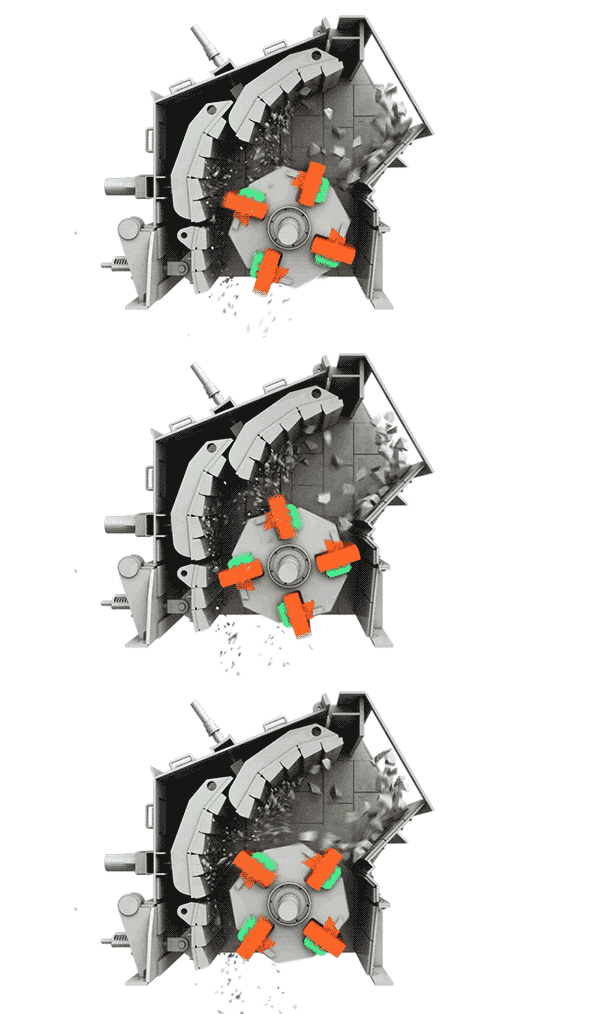
Application: Mainly used for medium crushing and fine crushing of stones below medium hardness, and the shape of the crushed stones is better.
Advantages: small size, simple structure, uniform product size, selective stone crushing, and high output.
Disadvantages: The blow hammer and the counterattack plate are particularly easy to wear, especially for crushing hard rocks, which are more severely worn and need to be replaced frequently; it is not suitable to crush plastic and viscous materials.
4. Sand Making Machine:
The work of the impact sand making machine is continuous. It uses high-speed moving materials to strike iron, strike each other and friction between the materials to break. There are two crushing methods: "stone-on-rock" and "stone-on-iron".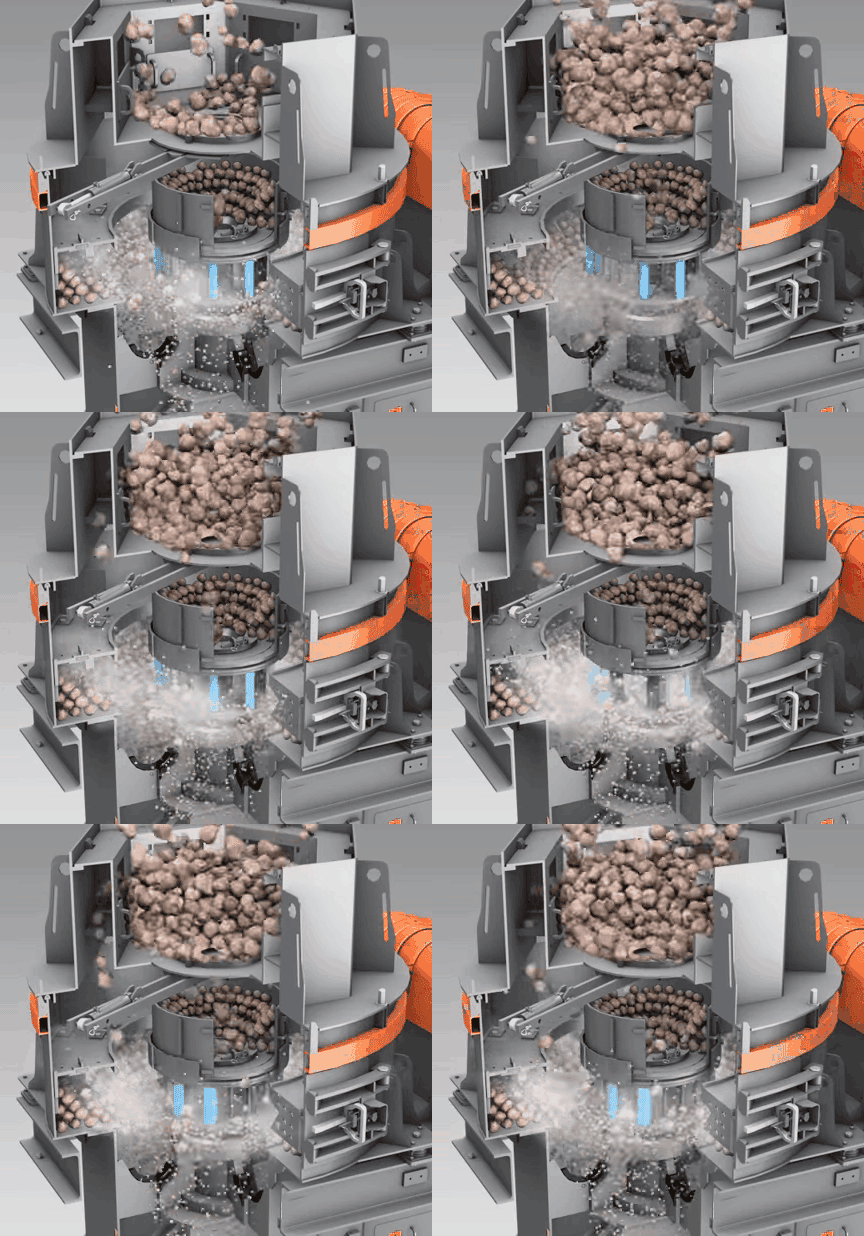
Application: "Stone-on-Stone" is suitable for abrasive materials with medium-hardness and above. The finished product has a better grain shape and a little more powder content; "Stone-on-Iron" is suitable for materials with low abrasiveness and lower than medium-hardness, with high crushing efficiency. The wear cost of the guard plate is higher, and the finished grain is slightly worse.
Advantages: low energy consumption, high output, large crushing ratio, small size of the equipment, easy operation, convenient installation and maintenance, with shaping function, cubic product, high bulk density, and the machine's counterattack plate wears very much during operation Less.
Disadvantages: The maintenance is complicated and the cost is high. Generally, the maximum feed size does not exceed 60mm, which is suitable for fine crushing and sand making.
5. Hammer Crusher:
The hammer crusher works continuously. The hammer on the high-speed rotating rotor is used to break the stone.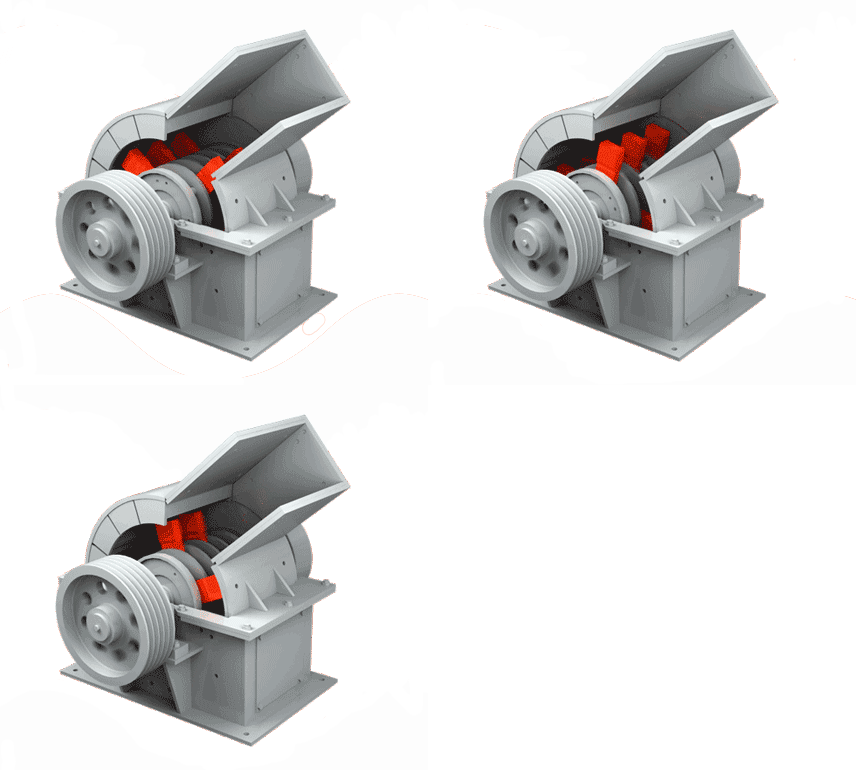
Application: it is suitable for medium and fine crushing of medium and low hardness and non abrasive stones (compressive strength less than 100MPa). It can also be used for sand making when there are grate bars, but it has been rarely used.
Advantages: large crushing ratio, high output and more fine materials.
Disadvantages: the hammer head wears fast, needs to be replaced frequently, raises dust during work, and viscous materials with raw material moisture content greater than 12% cannot pass through effectively.
6. Roller Crusher:
The work of the roller crusher is continuous. The stone is located between two parallel cylindrical rollers that move toward each other. The friction force between the stone and the roller bites the stone into the roller, facing the stone of the smooth roller. After being squeezed, the stones on the toothed roller are split and squeezed and broken.
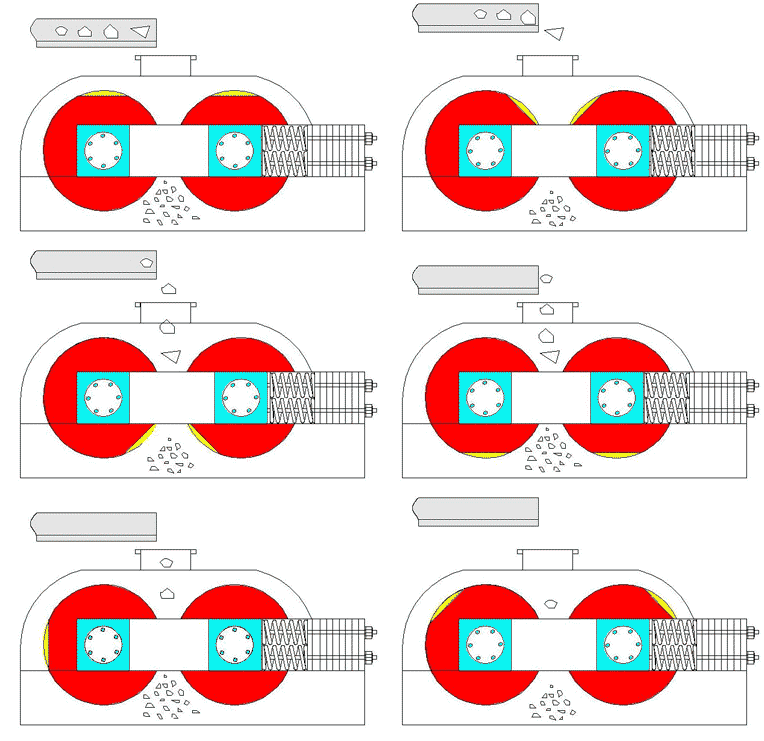
Application: Mainly used for medium crushing and fine crushing of medium hardness stones (compressive strength below 100MPa) such as coal and limestone. Roll crusher is not used in road gravel processing.
Advantages: simple, compact structure, low investment, convenient adjustment, and can be used to crush viscous materials.
Disadvantages: low production efficiency, unable to crush hard materials.
What Is Primary, Secondary, And Tertiary Crushing?
If you want to buy a suitable rock crusher, you also need to know the multi-stage crushing stages is in a complete crushing production line. Stone crushers are classified according to the fineness with which they fragment the starting material. There are primary crushing, secondary (intermediate) crushing and tertiary crushing. Some production lines may include a single crushing stages,the most common production lines involve at least two or three crushing stages.
1. Primary Crushing
As the first stage during a crushing circuit following extraction from a mine site, primary crushing reduces material to a size and shape which will be handled by the secondary crusher. The duty of the first crusher is to form it possible to move material on a conveyer belt . In most aggregate crushing plants, primary crushing is administered during a jaw crusher, although a gyratory crusher could also be used. If material is definitely crushed and not excessively abrasive, an impression crusher could even be the simplest choice as a primary crusher.
2. Secondary (Intermediate) Crushing
In secondary crushing, reduction ratios become an important consideration. Knowing just how fine you would like your final output to be, along side the feed requirements of your tertiary or final reduction crushing station, will assist you determine what proportion reduction must happen within this stage.
Cone crushers are often placed within the secondary crushing station because they're versatile in terms of feed, closed side setting, speed, and throw. With cone crushers, though, it's essential to work them at consistent choked settings to stay productivity up.
3. Tertiary Crushing
In this crushing stage, the standard and quantity of fine products are determined. Quality requirements are often stringent for the ultimate products, especially within the mixture industry. Customer requirements common to both the mixture and mining industries are capacities and quality (fraction/particle size). the mixture industry has additional quality demands like soundness and particle shape (cubicity).
 Case | Ship Doosan DX300 excavator to Africa!
 Case | Ship CAT 320D excavator to South Africa!
 Case | Ship 22 tons compactor to South-East Asia!
 Case | Ship CAT 345C excavator to Africa!

